
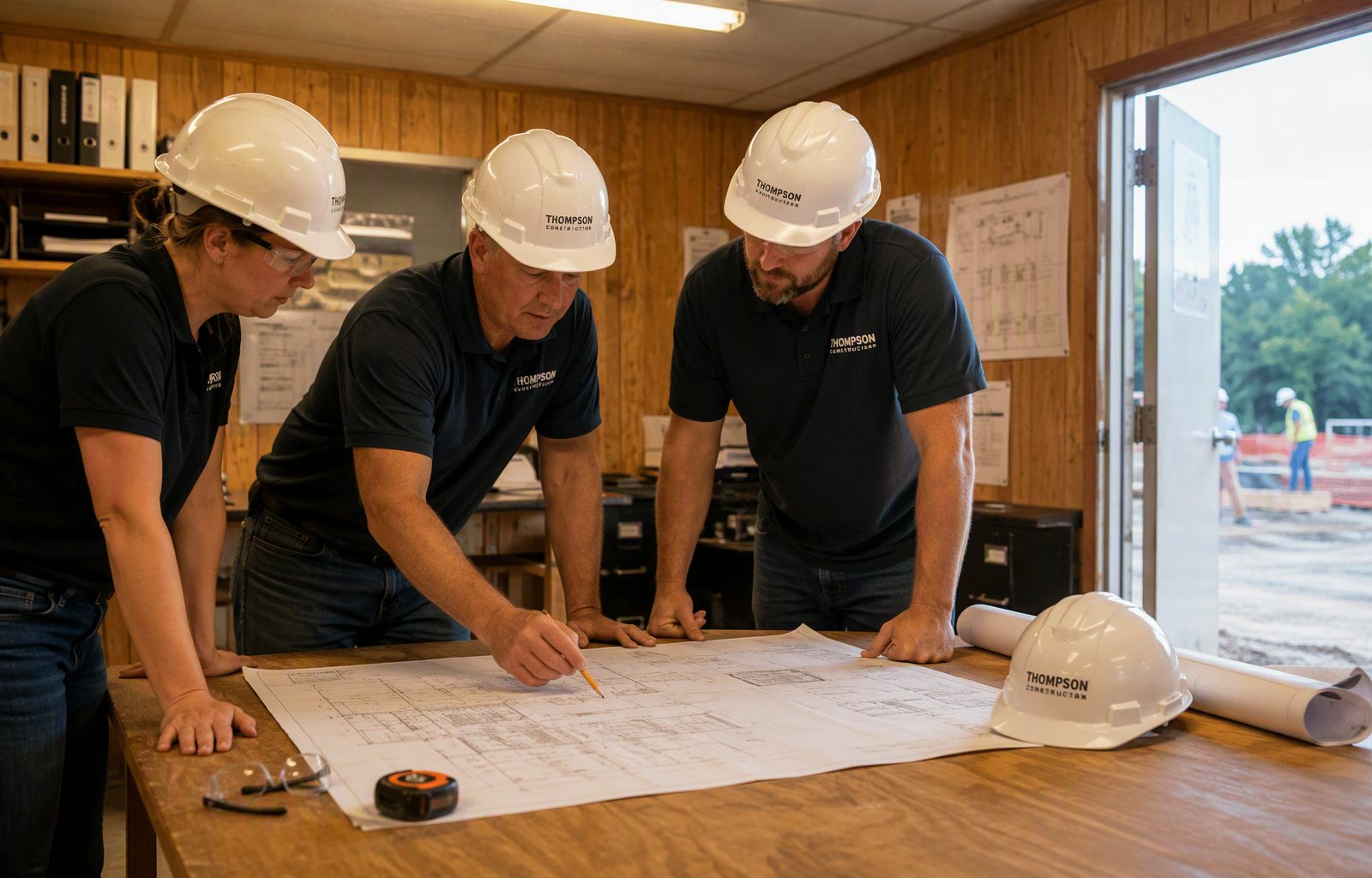
Custom Safety Plans
A complete program written around your Coquitlam operation – your sites, slopes, crews, and subcontractors – ready for inspection, audit, or your next bid.
Learn More
The Tri-Cities are among the fastest-growing communities in Metro Vancouver, with master-planned neighbourhoods climbing Burke Mountain and a trades economy working flat out to keep pace. Alcantara Safety Solutions builds WorkSafeBC-aligned safety plans, compliance reviews, and risk assessments for Coquitlam employers – on-site, fixed-fee, and written for your crews.
Coquitlam sits at the centre of the Tri-Cities – a region whose population is projected to grow by nearly 60 percent by 2050 – and that projection is visible from any hilltop in the city. Master-planned communities are reshaping Burke Mountain and the northeast sector, tower clusters are rising around Coquitlam Centre and the Evergreen Line stations, and every one of those projects draws on the same regional pool of framers, formers, electricians, plumbers, and finishers. For Tri-Cities contractors, work is plentiful; what is scarce is time to keep safety documentation current while the crews grow.
Growth is only half of Coquitlam's story. The city has also become a genuine business centre in its own right: clean technology firms like Moment Energy – which grew its headcount tenfold in four years building EV battery repurposing systems – a growing recreation and hospitality scene, municipal operations that rank among the region's largest employers, and the light industrial and commercial base strung along United Boulevard and the Lougheed corridor. That mix means Coquitlam employers face every flavour of WorkSafeBC obligation, from high-rise fall protection to chemical inventories to fleet and yard safety.
Alcantara Safety Solutions serves the full Tri-Cities – Coquitlam, Port Coquitlam, Port Moody, Anmore, and Belcarra – with the same on-site, fixed-fee approach we bring across the Lower Mainland. Every plan is written from scratch against the OHS Regulation, your industry's specific requirements, and the realities of building on Coquitlam's terrain, where slope, weather, and multi-employer density shape what compliance actually looks like on the ground.
Burke Mountain and the northeast sector are among the largest greenfield residential builds in the region, and they present a hazard profile flatter cities never see: steep-slope work where fall protection, access, and material handling all get harder; excavation and servicing on varied terrain; retaining structures; and winter weather that arrives earlier and stays longer at elevation. Add the tower construction around Coquitlam Centre and you get every construction compliance challenge in one municipality. We build site-specific plans, prime contractor packages, and orientation systems for Tri-Cities builders – sized for five-person framing crews and hundred-worker project sites alike.
The Tri-Cities' trades community – electrical, plumbing, HVAC, finishing, and specialty contractors – works across dozens of sites a year, and that mobility creates a documentation problem: every general contractor asks for safety records, and every site orientation starts from scratch if your paperwork is thin. We write trade contractor programs built for portability: a master program covering your workers' core hazards, site-specific addenda that take minutes to complete, and orientation documentation that primes accept without argument. When a GC's safety coordinator reviews your package, it should be the easiest approval of their week.
Coquitlam's industrial base along United Boulevard and the Fraser Mills area mixes legacy fabrication with a new generation of clean technology manufacturers – battery systems, building products, and specialty fabrication among them. These operations carry the classic manufacturing compliance stack: machine guarding, lockout, WHMIS 2015 chemical management, and – for battery and energy storage work specifically – electrical and thermal event procedures that most generic programs never contemplate. We write manufacturing programs that address what your process actually does, reviewed against both WorkSafeBC requirements and your customers' vendor standards.
Coquitlam and its neighbours run substantial public operations – works yards, parks and recreation facilities, water and sewer crews, and the contractors who support them. Public-sector-adjacent work carries distinctive obligations: confined space entry for utility work, traffic control for roadwork, excavations in public rights-of-way, and the heightened documentation expectations that come with public accountability. We help municipal contractors and service providers meet the procurement safety requirements that public work increasingly demands, including the pre-qualification questionnaires that now gate most civic contracts.
The United Boulevard corridor and the Lougheed industrial lands run on trucks, yards, and warehouses. The compliance stack here is practical and unforgiving: mobile equipment and pedestrian separation, loading dock procedures, yard traffic plans, WHMIS 2015 for shop chemicals, and driver orientation documentation. We build right-sized programs for fleet and yard employers: everything the Regulation requires, delivered in a format a busy operations manager can actually maintain.
Tri-Cities employers face the same OHS Regulation as the rest of the province, but the region's construction-heavy economy shapes the local enforcement picture. WorkSafeBC's construction inspection priorities – fall protection, excavations, prime contractor coordination – map directly onto Coquitlam's building boom, and prevention officers are a routine presence on larger Tri-Cities sites. The citations we see most often here are the classics: undocumented orientations on fast-moving residential sites, missing fall protection plans for work at height, and prime contractor coordination that everyone assumes someone else has handled.
Two Coquitlam specifics belong in every local program. First, terrain: slope is a hazard multiplier, and work plans written for flat sites fail on Burke Mountain grades – access, anchorage, material staging, and weather exposure all change with elevation. Second, asbestos and demolition: the Tri-Cities' older housing stock is cycling through renovation and teardown at pace, and pre-1990 demolition and reno work triggers asbestos assessment obligations that catch residential contractors constantly. We build both realities into every Tri-Cities program we write.
Every engagement starts with your operation, not a template. These are the services Tri-Cities employers ask for most:
A complete program written around your Coquitlam operation – your sites, slopes, crews, and subcontractors – ready for inspection, audit, or your next bid.
Learn More
Site-level assessments that account for what makes Tri-Cities work different: steep grades, older building stock, and dense multi-employer sites.
Learn More
A structured review of your documentation against the OHS Regulation and the pre-qualification standards your next bid will demand.
Learn MoreCoquitlam and the Tri-Cities are in our core on-site service area. We walk your sites – from Burke Mountain residential builds to United Boulevard shops – because terrain, site access, and crew composition are exactly the details that determine whether a plan works or just sits in a truck. Port Coquitlam, Port Moody, Anmore, and Belcarra get the same treatment.
Engagements run on a fixed fee quoted before we start: discovery call and site visit, draft program in about two weeks, a working session with your supervisors to make every procedure match how your crews actually work, then final documents and a briefing. Afterward – an inspection, a bid deadline, a claim – you are calling someone who has stood on your sites.
Ready when you are: call (778) 954-1988 or contact us – we typically respond within two business days.
Yes – our Tri-Cities service covers Coquitlam, Port Coquitlam, Port Moody, Anmore, and Belcarra, all on-site. The region's employers face the same WorkSafeBC framework, and we write programs for operations of every size across all five communities.
If you employ workers in construction, the core obligations apply regardless of crew size: orientation, safe work procedures for high-risk tasks, supervision, and incident reporting. A formal written program becomes mandatory at 20 workers, but prime contractors and general contractors typically require documented safety plans from every subcontractor on their sites – so in practice, most Tri-Cities trades need written documentation well before the legal threshold.
Pre-1990 buildings must be assumed to contain asbestos until a qualified assessment proves otherwise – and that describes a large share of the Tri-Cities' older housing stock now cycling through renovation and teardown. Work must stop and assessment must happen before materials are disturbed. We help residential contractors build the assessment, notification, and safe-work procedures into their standard process so compliance is automatic, not an emergency.
Yes. Civic and institutional procurement across the Tri-Cities increasingly requires documented safety programs and safety statistics as part of pre-qualification. We prepare the full package – program documents, records, and supporting summaries – and for contractors ready to differentiate, we map the path to COR certification, which carries real weight in public procurement.
For a single-crew Tri-Cities trade contractor, a complete custom program is typically ready within two to three weeks of our site visit, including revisions. Bid deadlines and inspection dates can usually be accommodated – tell us the date you are working toward and we will tell you honestly what is achievable.
Also serving: Burnaby · Vancouver · Surrey · Langley · All 16 Service Areas
Industries we serve: Construction · Civil & Infrastructure · Landscaping · All Industries
Contact us – we will identify exactly which WorkSafeBC requirements apply to your operation and quote a fixed fee before we start.
Contact Us