
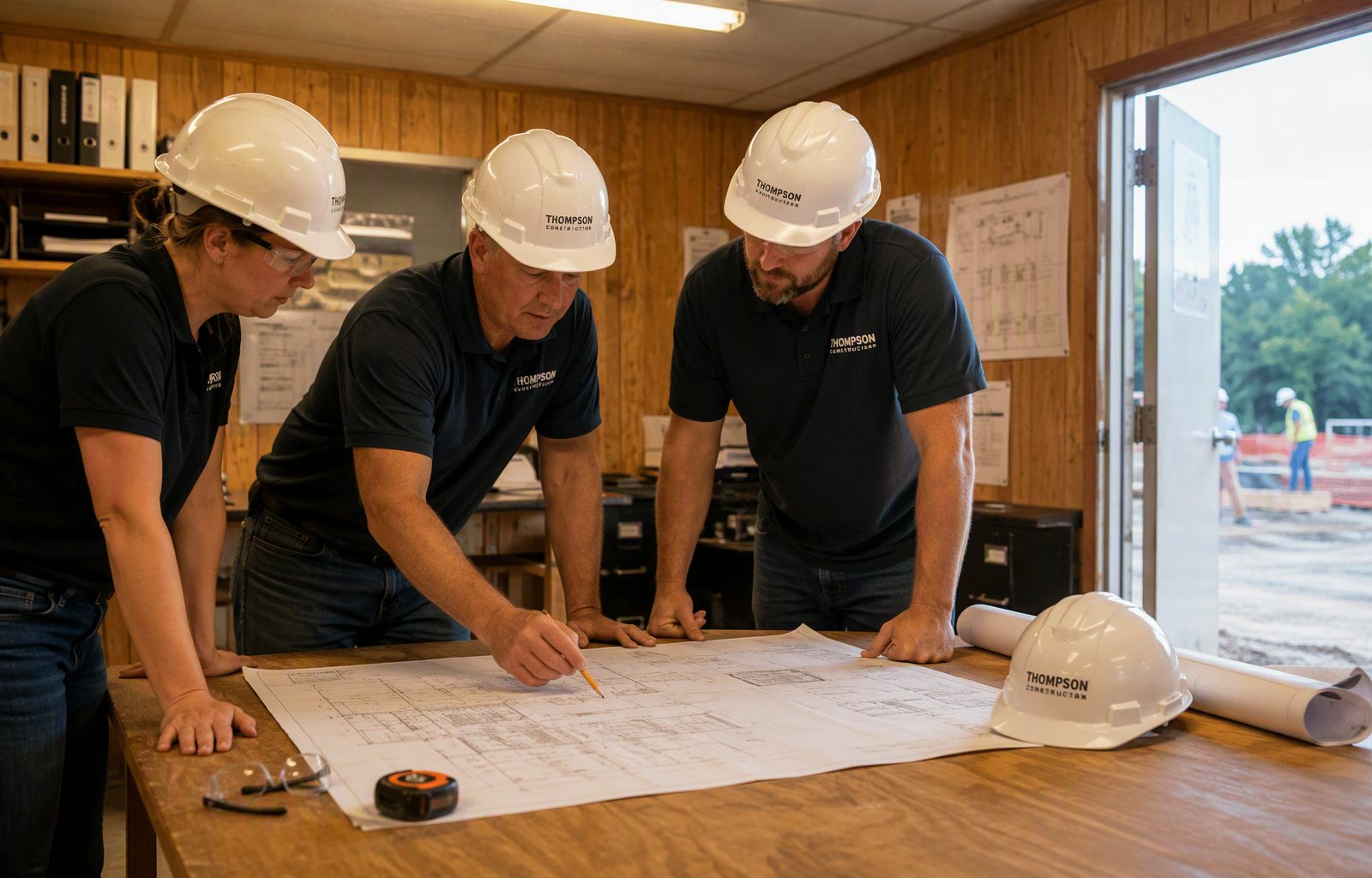
Custom Safety Plans
A complete program written around your Burnaby facility or jobsite – your equipment, chemicals, crews, and contractors – ready for inspection or audit.
Learn More
From the manufacturing floors of Big Bend to the light-industrial bays of Still Creek and the towers rising over Brentwood and Metrotown, Burnaby is one of the Lower Mainland's hardest-working industrial cities. Alcantara Safety Solutions delivers WorkSafeBC-aligned safety plans, compliance reviews, and risk assessments for Burnaby employers – on-site and fixed-fee.
Burnaby has anchored the Lower Mainland's industrial base for decades. Big Bend – the cluster of heavier industrial operations along Marine Way, Riverway, and Glenlyon – remains the densest legacy industrial submarket in the region, while Lake City and the Still Creek corridor have evolved toward tech-adjacent and light industrial occupiers: biopharma, electronics, and specialty manufacturers of every size. Layer on the high-rise construction reshaping Brentwood, Metrotown, and Edmonds, and Burnaby presents an unusually wide spread of workplace hazard profiles inside one municipal boundary.
That spread matters for compliance, because a Burnaby employer can face very different WorkSafeBC obligations depending on which side of the city it operates on. A specialty manufacturer in Big Bend answers to machine guarding, lockout, overhead cranes, and noise requirements. A contract electronics manufacturer in Still Creek answers to ergonomic and chemical handling requirements. A forming contractor on a Brentwood tower answers to fall protection, prime contractor coordination, and silica. Generic safety binders fail all three – just in different places.
Alcantara Safety Solutions builds safety programs for the full range of Burnaby operations. We are in the city regularly, walking production floors and construction sites alike, and every plan we write starts from what your people actually do – the equipment on your floor, the chemicals in your inventory, the subcontractors on your site – written against the specific parts of the OHS Regulation that apply to your industry.
Big Bend remains one of the region's densest industrial districts, and its manufacturers carry some of the most inspection-prone hazard profiles in B.C.: machine guarding on presses and conveyors, lockout for maintenance and changeovers, overhead crane and rigging documentation, noise exposure programs, and WHMIS 2015 chemical management. WorkSafeBC prevention officers know this sector well and inspect it accordingly. We build manufacturing safety programs that satisfy both the prevention officer and the customer vendor audits that increasingly arrive first – one coherent set of procedures your supervisors can actually run.
The Still Creek and Lake City corridors house electronics assemblers, fabricators, biopharma labs, printers, and specialty manufacturers – operations where the hazards are quieter but the obligations are identical. Chemical inventories require WHMIS 2015 documentation and exposure assessments. Repetitive assembly work requires ergonomic attention. Soldering, coating, and cleaning processes can trigger exposure control plan requirements. We help Burnaby manufacturers identify which parts of the Regulation actually apply to their process, then document exactly that – no more, no less.
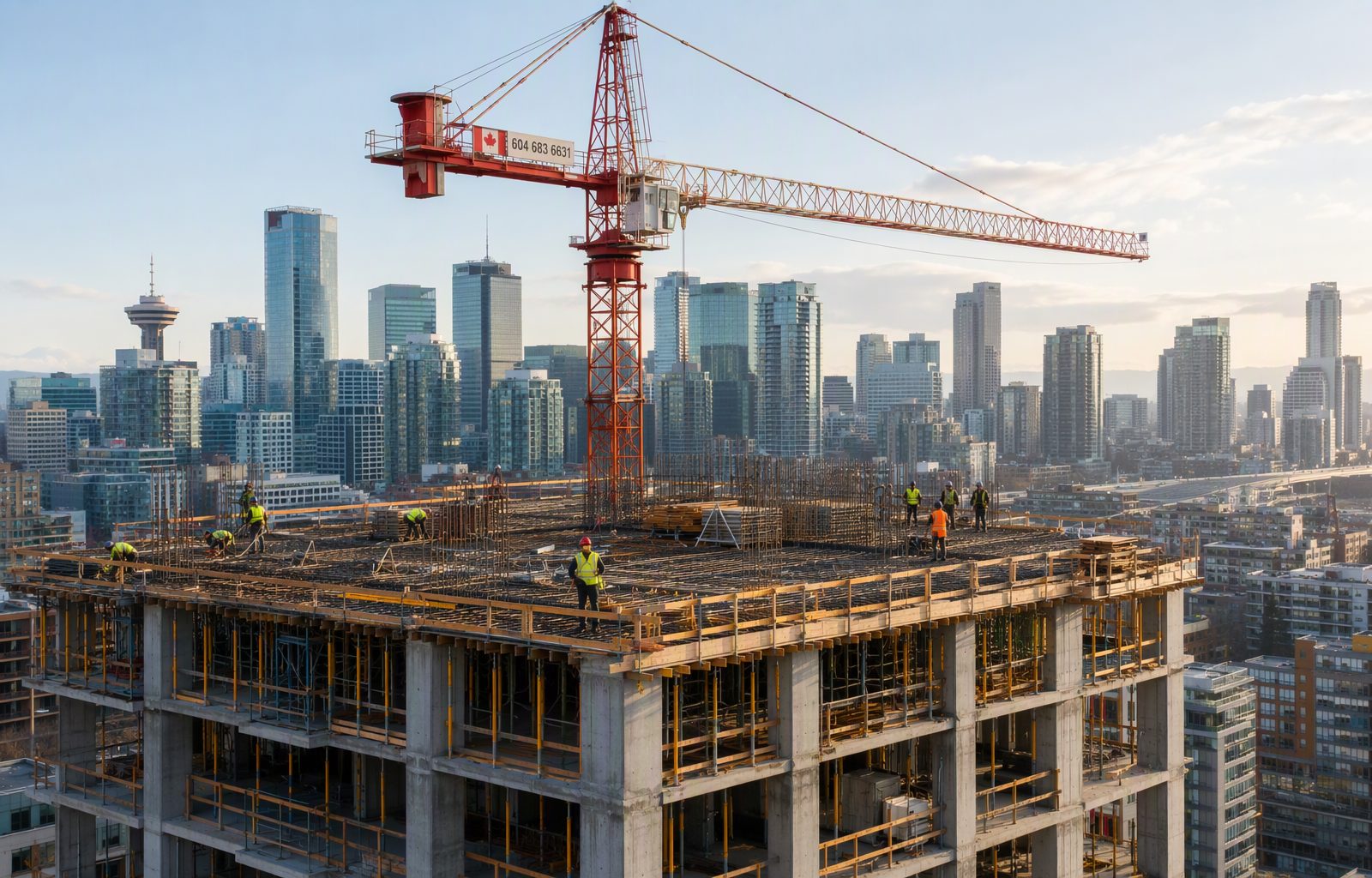
Brentwood and Metrotown are two of the most active high-rise nodes in Western Canada, and the trades working those towers face the full weight of the Regulation: fall protection at complex leading edges, tower crane coordination, concrete formwork requirements, silica exposure control, hoist and elevator safety, and multi-employer coordination involving dozens of subcontractors. Whether you are a forming, glazing, electrical, or mechanical subcontractor, we write the site-specific plans and orientation packages that get you onto tier-one sites – and keep you there through the audits.
Burnaby's central location and Highway 1 access make it a natural distribution hub, and its warehouse inventory ranges from legacy multi-tenant bays to modern high-clear facilities. The compliance fundamentals are consistent across all of them: powered industrial equipment training and documentation, rack inspections and load signage, pedestrian traffic management, dock safety, and injury-collision reporting discipline. We write warehouse programs that survive the scrutiny of the national retailers and 3PLs whose vendor audits increasingly drive this sector's documentation standards.
Burnaby's studio infrastructure makes it a production hub in its own right, and the contractors who build, wire, rig, paint, and service sets face a distinctive compliance environment: compressed schedules, temporary structures, night work, and crews assembled quickly for short engagements. We help studio-adjacent trades maintain the orientations, hazard assessments, and supervision documentation that let them move between productions without their paperwork falling a contract behind.
Burnaby employers fall squarely inside WorkSafeBC's most active inspection territory, and the sector mix here shapes what officers look for. In manufacturing, machine guarding and lockout draw the most attention – and the most orders. On construction sites, fall protection and prime contractor documentation lead the list. Across every sector, the foundational citations stay stubbornly the same: no written program, no documented orientations, no joint committee where one is required, no exposure control plan where an assessment says one is needed.
One Burnaby-specific note: the city's industrial buildings skew older, and older buildings mean asbestos. Any renovation, demolition, or maintenance work in pre-1990 construction – which describes a large share of Big Bend and Still Creek inventory – triggers asbestos assessment obligations before work begins. Employers who discover this requirement after an inspector does have an expensive problem. We build qualified asbestos assessment and safe-work procedures into every program we write for Burnaby's legacy building stock.
Every engagement starts with your operation, not a template. These are the services Burnaby employers request most:
A complete program written around your Burnaby facility or jobsite – your equipment, chemicals, crews, and contractors – ready for inspection or audit.
Learn More
Floor-level and site-level assessments that identify, score, and prioritize the real hazards in your operation – from ammonia systems to leading edges.
Learn More
A gap review of your current documentation against the OHS Regulation and your customers' audit requirements, with a prioritized corrective action plan.
Learn MoreWe work on-site across Burnaby – Big Bend, Still Creek, Lake City, the Brentwood and Metrotown construction nodes, and everywhere between. The walkthrough is where a plan earns its credibility: we see the guard that was removed for a product changeover, the rack without load plaques, the subcontractor whose orientation happened on a napkin. Those details are what WorkSafeBC officers find, so they are what we find first.
Engagements run on a fixed fee quoted before we start: discovery and walkthrough, draft program in roughly two weeks, a working session with your supervisors to pressure-test every procedure against reality, then final documents and a briefing. Afterward, when an inspection, a customer audit, or a claim lands on your desk, you have someone to call who already knows your operation.
Ready when you are: call (778) 954-1988 or contact us – we typically respond within two business days.
Yes – Burnaby is in our core on-site service area. We regularly visit facilities in Big Bend, Still Creek, Lake City, and construction sites across the city for walkthroughs, mock inspections, and supervisor briefings.
It is. Quality management systems protect product consistency; occupational health and safety systems protect your workers – and WorkSafeBC regulates the latter with entirely separate requirements. Machine guarding, lockout, WHMIS, noise programs, and joint committee obligations do not appear in a quality manual. We build OHS programs that complement your existing documentation so supervisors manage one coherent system, not two competing binders.
If your workers could disturb asbestos-containing materials – through maintenance, renovation, or even drilling into walls – the employer has obligations under the OHS Regulation regardless of who owns the building. Pre-1990 buildings in Burnaby should be assumed to contain asbestos until a qualified assessment says otherwise. We help you get the assessment, the inventory, and the safe-work procedures in place before work starts.
Yes. Vendor audits from national retailers, distributors, and logistics customers increasingly require documented safety programs, training records, and inspection routines. We review the audit standard you are being held to, close the gaps in your documentation, and prepare your team for the walkthrough portion – the part where auditors talk to your workers and compare what they say to what your binder claims.
For a single Burnaby facility or a trade contractor, a full custom program is typically ready within two to three weeks of our walkthrough, including one revision round with your supervisors. If you are working against an audit date or an inspection deadline, tell us up front and we will give you an honest answer on what can be ready in time.
Also serving: Vancouver · Coquitlam · Surrey · Richmond · All 16 Service Areas
Industries we serve: Construction · Warehousing · Civil & Infrastructure · All Industries
Contact us – we will identify exactly which WorkSafeBC requirements apply to your operation and quote a fixed fee before we start.
Contact Us