
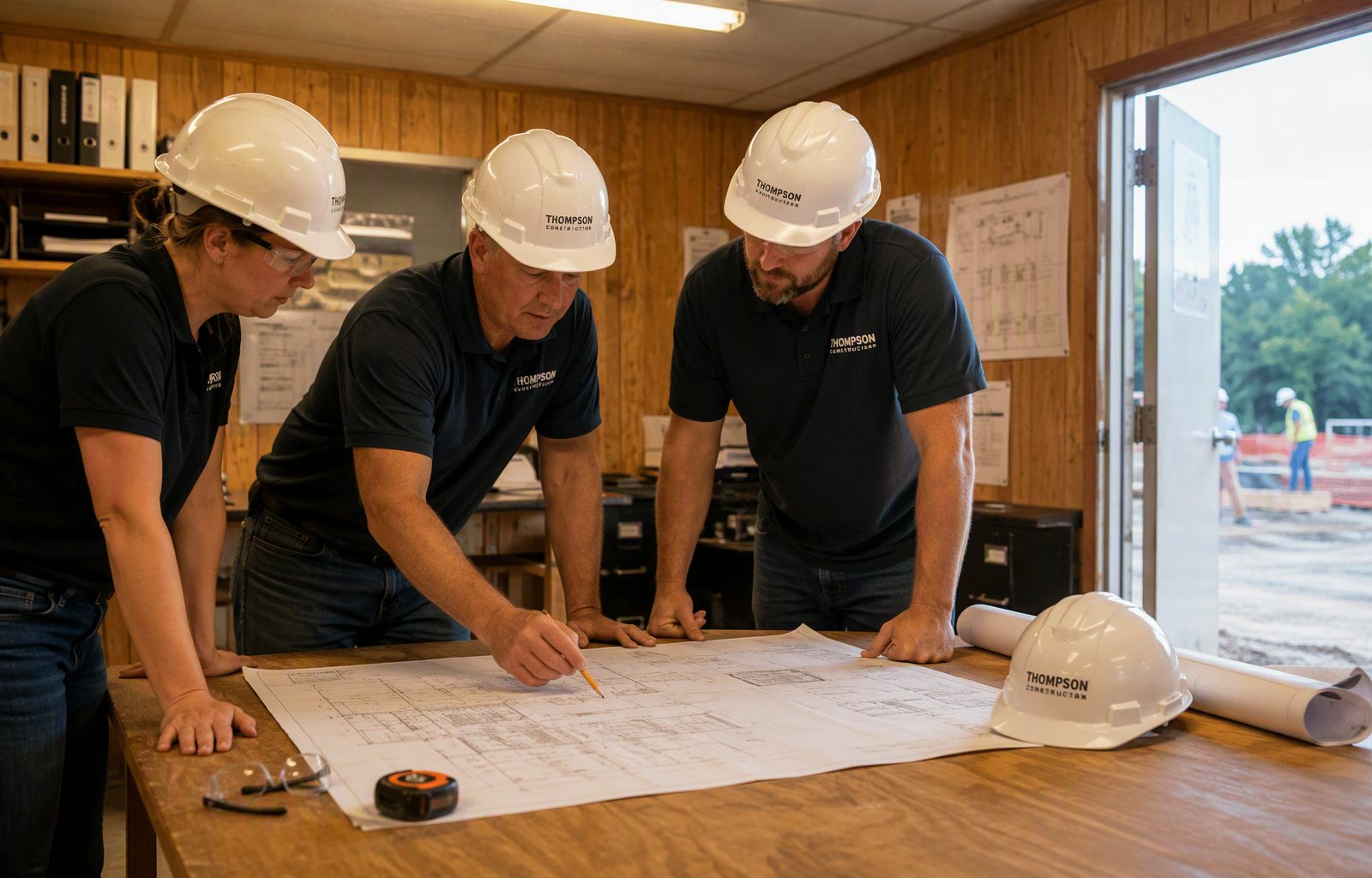
Custom Safety Plans
A complete program written around your Nanaimo operation – care facility, jobsite, shop, or terminal – sized to your team and inspection-ready.
Learn More
Nanaimo is Vancouver Island's second city and its mid-Island service hub – a healthcare-heavy economy with a working port, a busy construction sector, and one of the Island's fastest-growing populations. Alcantara Safety Solutions builds WorkSafeBC-aligned safety plans, compliance reviews, and risk assessments for Nanaimo employers – on-site and fixed-fee.
Nanaimo's economy tells a clear story in its employment numbers. Healthcare and social assistance is the city's largest sector – nearly 16 percent of the workforce, well above the provincial average, driven by an aging population and the regional hospital's role as the mid-Island's referral centre. Retail follows at about 14 percent, construction at over 9 percent, and education and public administration round out a service-oriented economy. Around those anchors sit the sectors that give Nanaimo its working character: the Nanaimo Port Authority's terminals and the Duke Point industrial gateway, marine services, and a steady pipeline of residential and commercial construction serving one of Vancouver Island's fastest-growing communities.
A healthcare-heavy economy has a distinctive compliance signature. Care environments carry some of the OHS Regulation's most specific requirements – violence prevention, safe patient handling, exposure control – and Nanaimo's demographic trajectory means the sector, and its obligations, will keep growing. Meanwhile the city's construction boom runs on the same residential and ICI compliance stack as the rest of the Island, and its port and marine operations add waterfront hazards to the regional picture.
Alcantara Safety Solutions serves employers across the Nanaimo region – from the harbour front to the north-end commercial districts, the Duke Point industrial area, and the growing communities of the mid-Island corridor. We work on-site throughout the region, writing programs from scratch against the Regulation and the specific requirements of your industry, at a fixed fee quoted before we begin.

Healthcare employs a larger share of Nanaimo's workforce than almost anywhere else in B.C. – nearly one worker in six – and the sector's OHS obligations are correspondingly specific: violence prevention programs with documented risk assessments, safe patient handling and mobility procedures, exposure control plans for biological hazards, and musculoskeletal injury prevention for care and support work. Nanaimo's care homes, clinics, home support agencies, and health-adjacent contractors all carry these requirements, and WorkSafeBC inspects the sector actively. We write healthcare programs that address the hazards inspectors actually cite, delivered in formats charge nurses and care coordinators can realistically maintain.
Nanaimo's growth – infill in the established neighbourhoods, new subdivisions pushing north and south, and commercial development along the corridor – keeps the local construction sector at full stretch. Residential builders and trades face the standard Island compliance stack: fall protection on wood-frame and mid-rise builds, excavation and servicing work, prime contractor coordination, and the asbestos assessment obligations that attach to the city's older housing stock as it cycles through renovation and teardown. We write site-specific plans and subcontractor packages sized for mid-Island contractors – lean operations that need documentation primes accept without negotiation.
Retail is Nanaimo's second-largest employer, and the sector's compliance profile is classic: young workers in their first jobs, late-shift violence prevention for convenience and liquor environments, manual handling in stockrooms, and the orientation obligations that attach to constant turnover. The city's restaurants, pubs, and tourism-adjacent businesses add kitchen hazards and seasonal hiring to the mix. We build right-sized programs for retail and hospitality employers – everything the Regulation requires, proportionate to lean management teams, and maintainable without dedicated safety staff.
The Nanaimo Port Authority's operations – the harbour front terminals and the Duke Point deep-sea facility – anchor a marine economy of stevedoring, marine services, and industrial logistics. Waterfront work concentrates serious hazards: work over water, dock and terminal traffic, cargo handling, confined spaces in vessel and industrial environments, and multi-employer coordination on port sites. We write marine and industrial programs that meet the documentation standards of port operators and the contractors who serve them.
Vancouver Island University, the school district, and municipal operations make Nanaimo a significant public-sector employment centre – and the contractors who serve public institutions face their procurement standards: documented safety programs, orientation records, incident statistics, and WorkSafeBC standing as conditions of award. We prepare the pre-qualification packages that let mid-Island contractors compete for institutional work, and right-sized programs for the public-facing operations themselves.
Nanaimo employers work under the same province-wide OHS Regulation, with local enforcement shaped by the city's sector mix. Healthcare – the city's biggest employer – is among WorkSafeBC's most-inspected industries, and violence prevention and safe patient handling draw consistent attention. Construction inspections follow the city's building activity, with fall protection and prime contractor documentation leading the citation lists. Across sectors, the foundational gaps are the usual ones: undocumented orientations, missing written programs, and joint committee requirements that growing employers cross without noticing.
One Nanaimo reality shapes many of our engagements: the city is full of growing mid-size employers – care agencies, contractors, retailers – crossing the thresholds where obligations escalate. Twenty workers triggers the formal written program requirement in most industries; joint committee obligations follow similar thresholds. Employers focused on growth often cross these lines without realizing the rules changed. We map which obligations apply at your current size and your next stage, so scaling never puts you out of compliance.
Every engagement starts with your operation, not a template. These are the services Nanaimo employers ask for most:
A complete program written around your Nanaimo operation – care facility, jobsite, shop, or terminal – sized to your team and inspection-ready.
Learn More
Assessments covering care environments, construction sites, retail operations, and waterfront work across the mid-Island.
Learn More
A gap review of your documentation against the OHS Regulation and the procurement standards of the mid-Island's institutional buyers.
Learn MoreNanaimo is in our on-site service area, and we work throughout the region – the harbour front, the north-end commercial districts, Duke Point, and the surrounding mid-Island communities. We walk your facility or jobsite before writing a word: the care home's lift equipment, the site's access constraints, the stockroom's racking – those details are what make a plan defensible.
Engagements run on a fixed fee quoted before we start: discovery and walkthrough, draft program in about two weeks, a working session with your supervisors, then final documents and a plain-language briefing. When an inspection, a procurement deadline, or a claim arrives afterward, you are calling someone who already knows your operation.
Ready when you are: call (778) 954-1988 or contact us – we typically respond within two business days.
Yes – Nanaimo is in our on-site service area. We regularly visit facilities, care homes, jobsites, and operations across the city and the mid-Island corridor for walkthroughs, mock inspections, and supervisor briefings.
Care sector employers carry some of the Regulation's most specific obligations: a violence prevention program with documented risk assessment (care work involves working alone with clients, sometimes in unpredictable environments), safe patient handling procedures and equipment training, exposure control for biological hazards, and – critically – systematic orientation for new staff, because care sector turnover makes orientation quality the single most-cited gap. We build programs frontline coordinators can actually deliver.
Crossing 20 workers triggers the formal written health and safety program requirement in most industries – and joint health and safety committee obligations follow at similar thresholds. Many growing Nanaimo employers cross these lines without noticing. We assess exactly which obligations now apply, build the written program, and help you stand up the committee structure with trained worker and employer representatives.
Yes. Mid-Island institutional buyers routinely require documented safety programs, statistics, and WorkSafeBC standing in procurement. We prepare the full pre-qualification package – and for contractors ready to differentiate on larger public work, we map the path to COR certification, which carries increasing weight in institutional procurement.
For a single Nanaimo operation, a complete custom program is typically ready within two to three weeks of our walkthrough, including revisions. Procurement deadlines and inspection timelines can usually be accommodated – tell us the date you are working toward and we will plan backward from it.
Also serving: Courtenay & Comox · Campbell River · Victoria · Vancouver · All 16 Service Areas
Industries we serve: Construction · Warehousing · Civil & Infrastructure · All Industries
Contact us – we will identify exactly which WorkSafeBC requirements apply to your operation and quote a fixed fee before we start.
Contact Us